

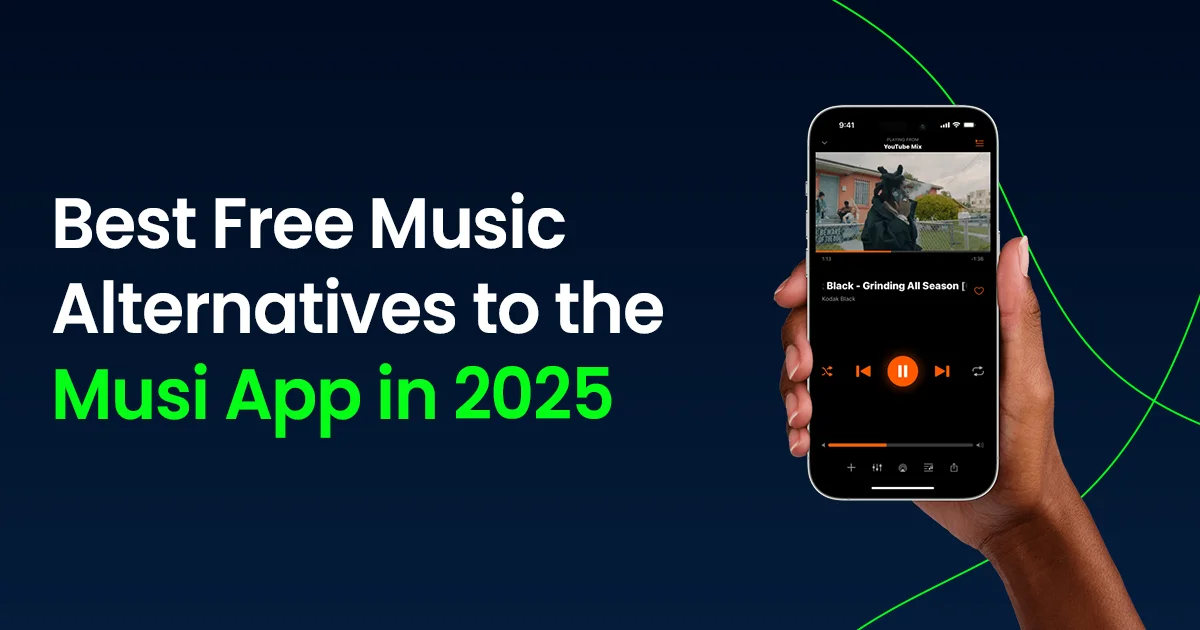
Musi was once a favorite music streaming app among iPhone users, allowing them to play YouTube audio even with their screens turned off. However, due to recent changes in YouTube’s policies, the app has been removed from the App Store, leaving thousands of listeners searching for reliable apps like Musi to continue their music experience.
As users hunt for the best Musi alternatives, online discussions and Reddit threads are filled with creators exploring how to develop their own music app like Musi. And it makes sense. According to Business Wire, the global music streaming market is expected to exceed $46.9 billion by 2027, and the demand for affordable and user-friendly music platforms is stronger than ever.
This article will help you explore both sides. If you’re looking for free music apps like Musi, we’ve listed the top Musi alternatives for Android and iPhone that deliver a similar experience. And if you’re planning to create a music streaming app yourself, we’ll also outline the key technologies and features involved in the process.
Why Users Are Searching for Musi Alternatives in 2026
The demand for Musi alternatives has increased because users now expect more stable, legal, and feature-rich streaming platforms. Musi was popular because of its simplicity and YouTube-based playback, but modern users want additional capabilities like offline downloads, cross-device syncing, better recommendations, and fewer restrictions.
Another major factor is platform reliability. Users prefer apps that are officially supported on the App Store and Google Play, ensuring long-term availability and security updates.
Best Free Music Alternatives to Musi App at a Glance
If you’re searching for a Musi replacement, there isn’t a single app that works best for everyone. Some services focus on free streaming, while others prioritize offline listening, personalized recommendations, or high-quality audio. The table below summarizes the strengths of the most popular alternatives so you can quickly identify which app matches your needs before exploring each option in detail.
| App | Free Version | Offline Listening | Best For |
|---|---|---|---|
| Spotify | Yes | Premium | Music discovery |
| YouTube Music | Yes | Premium | YouTube users |
| Apple Music | Trial | Yes | Apple ecosystem |
| Amazon Music | Limited | Premium | Prime members |
| Deezer | Yes | Premium | Audio quality |
| SoundCloud | Yes | Limited | Independent artists |
What is Musi App?
The Musi app is a free music streaming application that allows users to play audio directly from YouTube and other online sources.
- Learn more on YouTube
- YouTube API policy: Google Developers Terms
Originally designed for iOS users, Musi became popular because it provided background playback from YouTube without requiring a premium subscription.
Why Was the Musi App Removed from the App Store?
The Musi App was taken down from the Apple App Store in September 2024 after complaints from YouTube and music industry groups. Musi was reported to violate YouTube’s API terms by enabling background playback and modifying how content was delivered.
This removal created a major gap in the market, pushing users toward alternative music streaming platforms that comply with official licensing rules and app store guidelines.
Best Free Music Alternatives to Musi App (Detailed Review)
Below are the most reliable Musi alternatives available today.
1. YouTube Music
YouTube Music is the closest official alternative to Musi. It offers a massive library, background playback, and personalized recommendations.
Best For: YouTube users and casual listeners
Offline Mode: Premium only
Key Strength: Integration with YouTube ecosystem
Explore here: YouTube Music official platform
2. Spotify
Spotify is one of the most popular music streaming platforms globally, offering curated playlists, podcasts, and AI-based recommendations.
Best For: Music discovery and playlists
Offline Mode: Premium only
Key Strength: Smart recommendation engine
Visit: Spotify music streaming service
3. Apple Music
Apple Music provides high-quality streaming and deep integration with Apple devices.
Best For: iPhone and Mac users
Offline Mode: Yes (paid)
Key Strength: Lossless audio and ecosystem sync
Learn more: Apple Music official page
4. SoundCloud
SoundCloud focuses on independent artists, remixes, and emerging music creators.
Best For: Discovering new artists
Offline Mode: Limited
Key Strength: User-generated content
Discover music: SoundCloud platform
5. Deezer
Deezer is known for its high-quality audio streaming and curated playlists.
Best For: Audio quality lovers
Offline Mode: Premium only
Key Strength: HiFi streaming options
Stream here: Deezer music service
6. Audiomack
Audiomack is a free music platform focused on hip-hop, Afrobeats, and trending music genres.
Best For: Free streaming users
Offline Mode: Yes
Key Strength: Free downloads and offline play
Try it here: Audiomack free music platform
Features Every Music App Should Have
A good music streaming app is not just about playing songs. It must deliver a smooth, personalized experience.
1. User-Friendly Interface
Simple navigation improves engagement and retention.
2. Smart Recommendations
AI-based suggestions improve music discovery.
3. Playlist Creation
Users should be able to organize music easily.
4. Background Playback
Essential for multitasking users.
5. Offline Listening
Allows users to access music without internet.
6. High-Quality Audio
Better sound quality increases user satisfaction.
7. Legal API Integration
Ensures long-term app stability and store approval.
Feature Comparison Table
| Feature | Spotify | Apple Music | YouTube Music | Deezer | SoundCloud |
|---|---|---|---|---|---|
| Free Plan | Yes | Trial | Yes | Yes | Yes |
| Offline Listening | Premium | Yes | Premium | Premium | Limited |
| Audio Quality | High | Lossless | High | HiFi | Medium |
| Podcasts | Yes | Yes | Limited | Yes | Limited |
| Recommendations | Strong | Good | Strong | Good | Medium |
Which Musi Alternative Should You Choose?
- For iPhone users: Apple Music or YouTube Music
- For free users: Spotify or Audiomack
- For audio quality: Deezer or Apple Music
- For discovery: Spotify
- For independent music: SoundCloud
How to Develop a Music App Like Musi
Developing a music app requires planning, licensing, and the right technical architecture.
1. Define Your Goal
Decide whether your app focuses on streaming, downloads, or playlists.
2. Plan Features
Include search, playlists, recommendations, and offline support.
3. Choose Tech Stack
Use Flutter or Swift for mobile apps and scalable backend systems.
4. UI and Performance
Focus on speed, usability, and smooth playback.
5. Testing and Launch
Test across devices before publishing on app stores.
Next-Gen Music Streaming Opportunity
The removal of Musi from app stores highlights a growing demand for flexible and legal music streaming platforms. This creates opportunities for developers to build modern apps that focus on user experience, personalization, and compliance with platform policies.
Businesses looking to enter this space need to focus on scalability, licensing, and user retention strategies to succeed in the competitive music streaming market.
At Sumato Solutions, we help companies design and develop scalable music streaming applications that focus on performance, security, and user experience.
Conclusion
Musi’s removal has changed how users consume music on mobile devices. While several strong alternatives exist, the best choice depends on individual listening habits, device preferences, and feature requirements. Whether you prefer Spotify’s discovery engine, Apple Music’s ecosystem, or Audiomack’s free streaming model, there is a suitable alternative available for every type of user.